
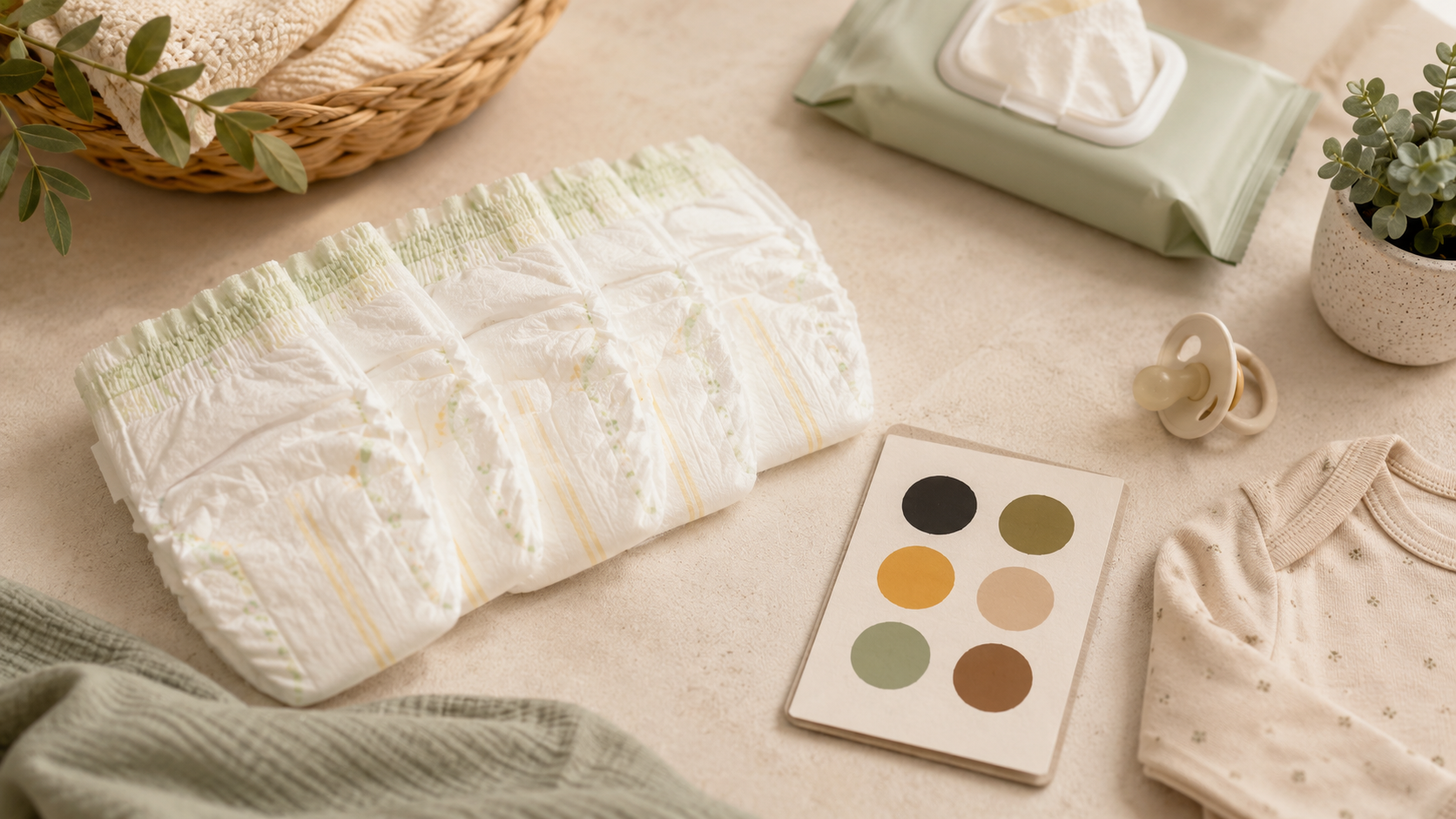
You open the diaper. It's green. Or black. Or a shade of yellow you're pretty sure isn't in any book. At 2 a.m., that's enough to send a new parent into a spiral. The good news: newborn poop comes in a wider range of normal than most people expect — and the colors that actually mean "call now" are short and specific.
Here's the chart, what each color usually means, and the exact red flags that mean stop and call your pediatrician.
🎨 Newborn poop colors, in order of when you'll see them
Black, sticky (meconium) — first 24–48 hours
Meconium is thick, tar-like, and almost impossible to wipe off. It's a mix of everything your baby swallowed in the womb. Expect it for the first 1–2 days. If your baby is still passing pure black meconium after day 4, mention it at your next visit.
Greenish-brown (transitional) — day 2 to day 4
As milk arrives and the digestive system switches on, meconium gives way to a looser, greenish-brown stool. Totally normal. You'll see a few of these before things settle into a steadier color.
Mustard yellow, seedy — breastfed, day 4 onward
Breastmilk stool is famously mustard-yellow, loose, and full of little seedy bits that look like cottage cheese. It smells mild (some parents describe it as popcorn or yogurt). This is normal and expected — the "seeds" are not undigested food.
Tan or peanut-butter — formula-fed
Formula stool is firmer, more formed, and usually tan to light brown. It smells stronger than breastmilk stool. Both textures and both colors are normal for a well-fed baby.
Green — any age
Green stool is the color that panics parents most, and it's almost always fine. Common causes: foremilk-heavy feeds, iron in formula, a mild cold, or a change in your diet. If your baby is feeding well, gaining, and generally content, green stool alone is not an emergency. Persistent green + fussy + poor feeding is worth a call.
Brown, formed — after solids start (around 6 months)
Once real food joins the party, expect stool to firm up, darken, and — sorry — start smelling like adult poop. This is a milestone, not a problem.
🚨 Call your pediatrician now if you see:
- White, chalky, or clay-colored stool. This is the one color that is never normal. It can signal a bile or liver problem and needs to be checked, even during off-hours.
- Red blood in stool — streaks, spots, or a jelly-like texture. Causes range from a small anal fissure to a cow's milk protein allergy to something that needs urgent care. Take a photo before you clean up; your provider will want to see it.
- Black stool after day 4, once meconium should be gone. Can indicate upper GI bleeding.
- No stool for more than 24 hours in a newborn under 6 weeks, especially with a hard belly, refusing feeds, or vomiting.
- Very watery, mucous-heavy, or explosive stool with fever in a baby under 3 months. Dehydration in newborns moves fast.
🟢 Usually fine — mention at the next visit
- Occasional green stool in an otherwise happy, feeding baby.
- Very loose, seedy breastmilk stool — this is texture, not diarrhea.
- One skipped day in a breastfed baby 6+ weeks old. Breastmilk is efficient; some babies stretch to every 2–3 days without issue.
- Firmer, darker stool after starting formula or solids.
📊 Diaper counts: how much is enough
A rough rule for the first month: at least one wet diaper per day of life until day 6, then at least 6 wet and 3–4 dirty diapers per day. Any fewer, combined with a sleepy or fussy baby, is worth a call to your provider or lactation consultant.
References
- American Academy of Pediatrics — Newborn Digestion
- Stanford Medicine — Bilirubin and Stool Color in Infants